
Ganesh Chaturthi is a happy festival that many people in India celebrate. Devotees across the country welcome Lord Ganesha, the remover of obstacles and the bringer of wisdom, into their homes and communities with great devotion. In 2025, people will celebrate Ganesh Chaturthi on August 27. While the festival is known for its grandeur, music, prayers, and colorful idols, it is also a time to reflect on how our celebrations affect the environment. This year, the focus is shifting strongly toward celebrating an eco-friendly Ganesh Chaturthi that combines tradition with sustainability.
People are becoming more aware of how idols made from harmful materials pollute rivers and lakes after immersion. As a result, many families and communities are choosing clay idols, natural decorations, and smaller celebrations that still keep the spirit of devotion alive. By celebrating in this way, everyone can honor Lord Ganesha while also protecting nature.
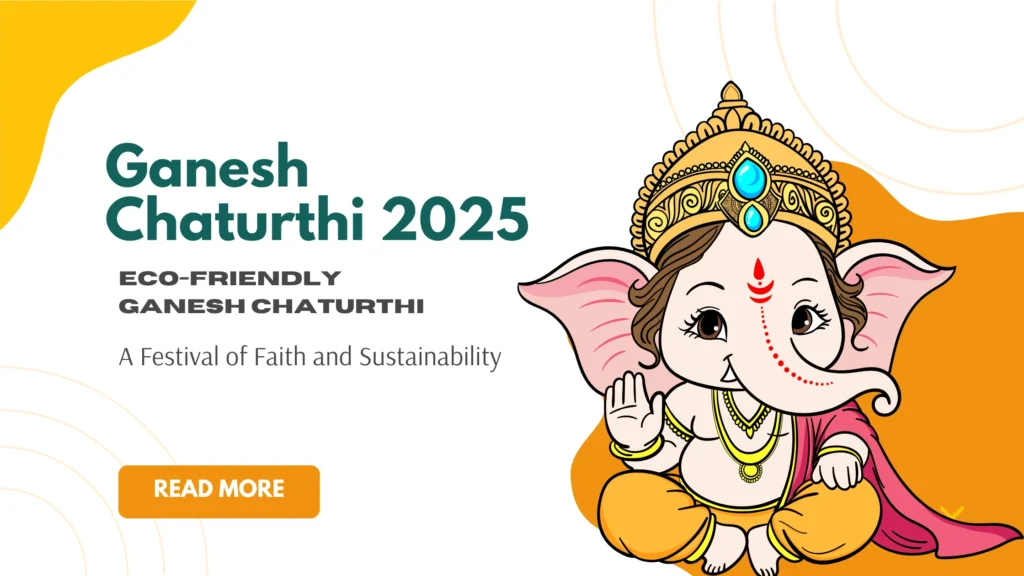
History and Significance of Ganesh Chaturthi
Ganesh Chaturthi is believed to have originated centuries ago as a private household ritual, but it became a public celebration during the freedom movement, thanks to Lokmanya Tilak. He transformed it into a festival of unity and community bonding. Today, it stands not only as a religious event but also as a cultural occasion that brings people together. Lord Ganesha is worshipped as the god of wisdom, success, and wealth. People believe his presence during this festival brings peace and happiness.
The Environmental Concerns
Over the years, celebrations have grown larger and more commercialised. Idols made from Plaster of Paris and painted with chemical colours are commonly used because they are cheaper and easily available. However, when these idols are immersed in rivers, lakes, or oceans, they release harmful substances that pollute the water and harm aquatic life. Added to this are plastic decorations, excessive use of electricity, and waste generated during the celebrations. While the devotion remains pure, the impact on the environment is serious. That’s why more and more people are asking to celebrate Ganesh Chaturthi in an eco-friendly way.
Embracing Eco-Friendly Idols
One of the best ways to celebrate Ganesh Chaturthi in an eco-friendly way is by using idols made of natural clay. These idols melt easily in water and do not cause pollution. In 2025, many artisans are creating idols not only from clay but also from papier-mache, cow dung, and even plant seeds. Seed idols are especially unique because when immersed, they grow into plants, symbolising new beginnings and life. Many families now choose smaller idols that can be immersed at home in a bucket of water instead of in rivers or lakes. This simple choice ensures devotion while protecting nature.
Sustainable Decorations and Lighting
Decorations are an essential part of Ganesh Chaturthi, but they do not need to harm the environment. Instead of using thermocol, plastic, and synthetic materials, many communities are now choosing bamboo, jute, fresh flowers, and cloth. These materials are biodegradable and beautiful. Reusing decorations from previous years is another smart step toward reducing waste. Lighting is also an important part of the festival, and in 2025, solar-powered lamps and energy-efficient LED lights are gaining popularity. These not only save electricity but also reflect a thoughtful approach to celebration.
Responsible Food and Offerings
Food plays a central role in Ganesh Chaturthi, especially modaks, which are believed to be Lord Ganesha’s favourite sweet. However, many times food is wasted or distributed using plastic plates and cups. This year, more households and community kitchens are moving to biodegradable plates and reusable utensils. Excess food is being shared with those in need, ensuring that the spirit of giving and sharing is truly celebrated. Using local ingredients also supports farmers and reduces the carbon footprint of the festival.
Community Awareness and Youth Involvement
An inspiring change during Ganesh Chaturthi 2025 is the growing involvement of youth and community groups in promoting eco-friendly practices. Many organisations and NGOs are conducting workshops to teach families how to make clay idols at home and how to decorate them using sustainable materials. Social media campaigns are spreading messages of responsible celebration, and young people are taking the lead in encouraging their neighbourhoods to adopt greener practices. This community spirit ensures that sustainability becomes a part of tradition rather than something separate.
Eco-Friendly Visarjan Practices
Immersion or visarjan is the most emotional and significant part of Ganesh Chaturthi. Traditionally, idols are immersed in rivers or seas, but this causes pollution when harmful materials are used. To address this, many cities are now setting up artificial ponds and water tanks for immersion. Families are encouraged to immerse idols at home in buckets or tubs. After immersion, the clay can be reused for gardening, which gives a new life to the idol. These eco-friendly visarjan practices ensure that the environment is respected while maintaining the purity of the ritual.
The True Spirit of Celebration
Ganesh Chaturthi has always been about devotion, unity, and joy. Choosing eco-friendly ways to celebrate does not detract from the grandeur of the festival; rather, it adds a deeper meaning to it. Lord Ganesha is known as the remover of obstacles, and one of the greatest obstacles humanity faces today is environmental damage. By celebrating Ganesh Chaturthi responsibly, we seek Bappa’s blessings to overcome this challenge and create a better world for future generations.
Conclusion
Ganesh Chaturthi 2025 allows us to celebrate with faith and sustainability. By choosing clay idols, biodegradable decorations, solar lighting, and responsible visarjan methods, we can make sure that our devotion does not harm nature. This festival has always symbolised new beginnings, and what better way to honour Lord Ganesha than by beginning a tradition of eco-friendly celebrations. This year, let us welcome Bappa into our homes and hearts with love, devotion, and respect for the earth. An eco-friendly Ganesh Chaturthi is a true celebration of faith, sustainability, and harmony with nature.